In recent years, the power conversion efficiency of perovskite solar cells has improved significantly (~27%), making them promising alternatives to traditional crystalline silicon solar cells. Among them, inverted perovskite solar cells have attracted widespread attention due to their low hysteresis, simple fabrication process, and low processing cost. However, despite remarkable efficiency gains, challenges such as difficult large-scale fabrication and poor stability still hinder their commercialization. The performance of perovskite solar cells is mainly determined by the crystallization quality of perovskite films. Poor crystallinity leads to numerous lattice defects, which cause non-radiative carrier recombination and reduce device efficiency and stability. Therefore, regulating the crystallization process and improving film quality can effectively reduce defect density, thereby enhancing device efficiency and stability.
To address the issue of poor crystallinity in perovskite films, the research team led by Associate Professor You Peng introduced a resonance-structured ionic additive, PPNCl, into the perovskite precursor solution. The unique resonance structure of PPNCl enables strong coordination with perovskite components, achieving the regulation of colloidal cluster size, releasing residual stress in perovskite films, and effectively passivating surface defects. In addition, the excellent hydrophobic property of the [PPN]+ cation significantly improves the environmental stability of perovskite films.
The results show that incorporating the resonance-structured ionic additive PPNCl into the perovskite precursor solution plays a crucial role in improving device performance. Through a series of characterization and testing methods, the team found that the additive can effectively delay the crystallization process of perovskite, resulting in perovskite films with larger grains and lower defect density. Furthermore, perovskite solar cells with PPNCl incorporation achieved a champion efficiency of 25.30% and exhibited good device stability under high-temperature and humid test conditions.
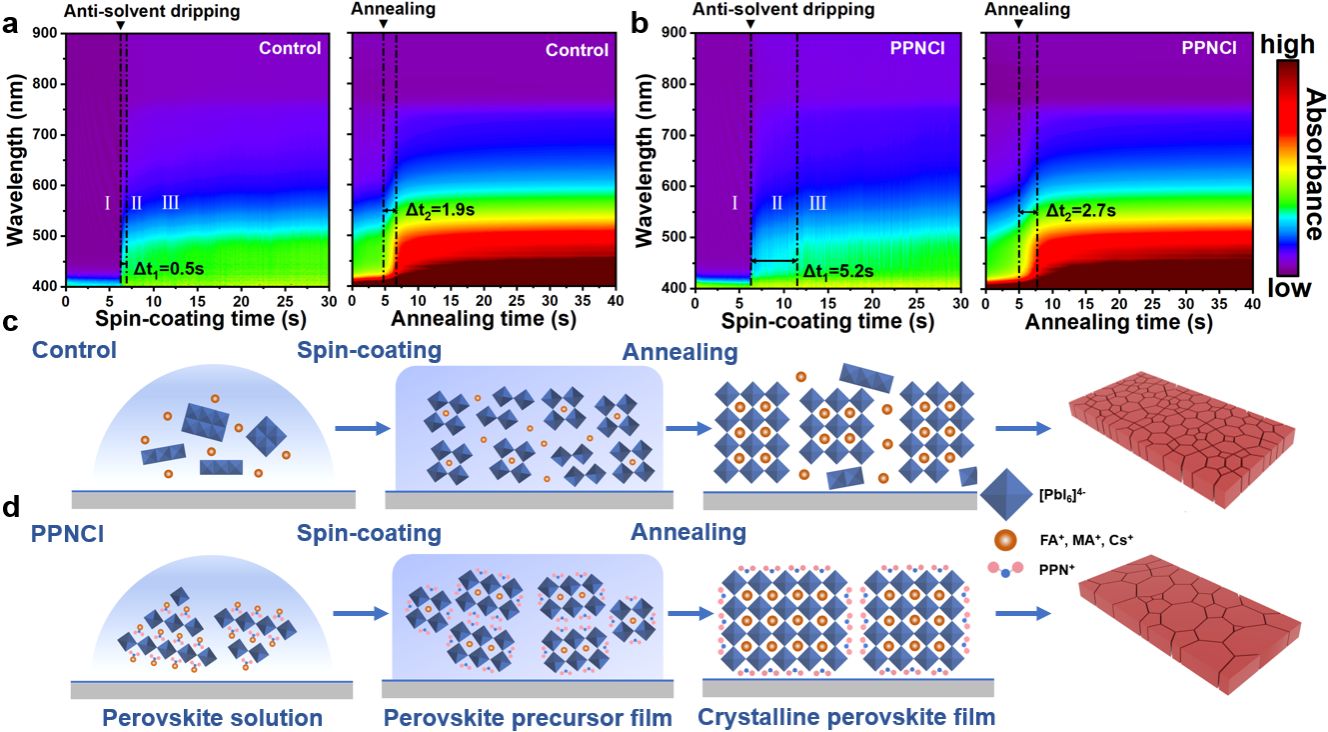
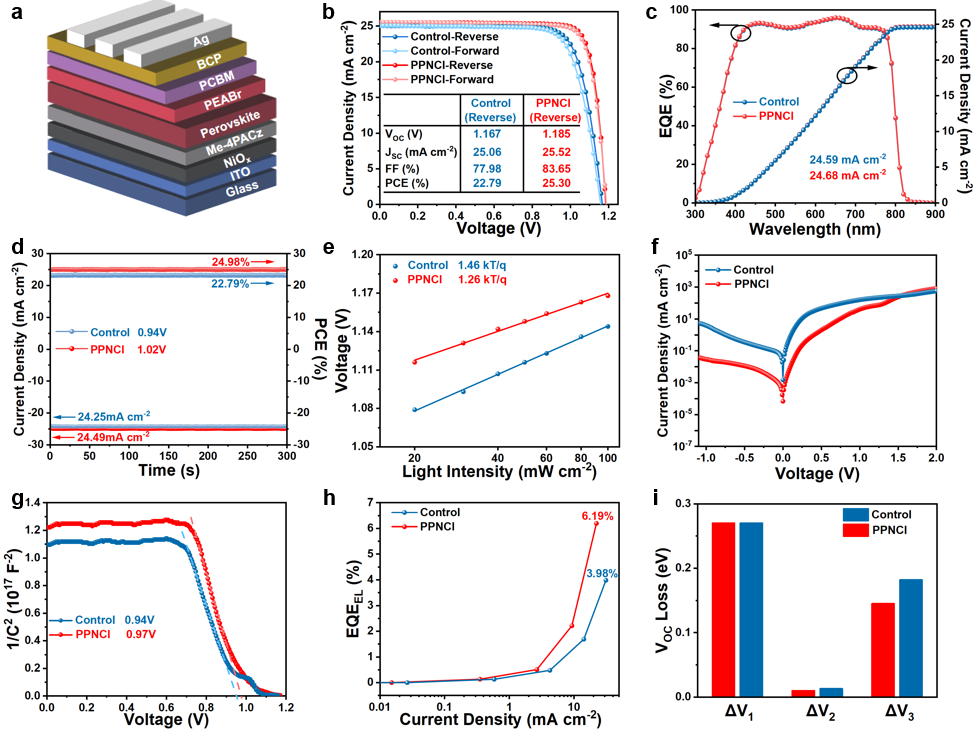
This work was published in the internationally renowned journal Chemical Engineering Journal (IF: 13.4; CAS Zone 1) under the title Crystallization regulation and defect passivation of perovskite films via resonance-structured ionic additive for high-performance solar cells. The School of New Materials and New Energy at Shenzhen Technology University is the first and sole corresponding institution. Huang Guogen, a 2023 graduate student in Materials Engineering, and research assistant Dong Yuqing are co-first authors. Associate Professor You Peng is the corresponding author, while Distinguished Professor Li Shunpu and Associate Professor Lin Tao are co-corresponding authors.






 Address: No. 3002, Lantian Road, Pingshan District, Shenzhen, Guangdong Province zip code: 518118
 Tel: 0755-23256080


